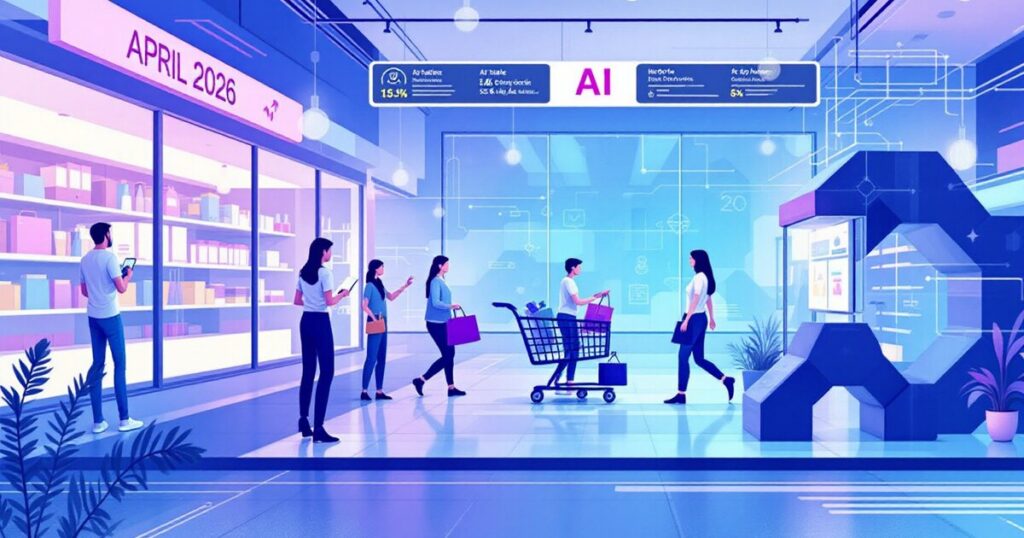




April 2026: Insights on AI Adoption in the Retail Sector
AI Industry NewsApril 13, 2026🕑 16 min read
🌐 Also available in:🇩🇪 Deutsch🇨🇿 Čeština

Last updated: June 21, 2026

April 2026: Insights on AI Adoption in the Retail Sector

April 2026: Insights on AI Adoption in the Retail Sector

Key Takeaways

  • AI is transforming retail operations
  • Enhancing customer experience
  • Technology adoption rates are rising
  • Real-world examples of success
  • Future predictions for the industry

As we move further into 2026, the retail landscape continues to evolve at an unprecedented pace, largely driven by the proliferation of artificial intelligence (AI). From enhancing customer experiences to streamlining operations, AI adoption in retail is not merely a trend; it’s a necessity for businesses aiming to stay competitive in the digital age. Retailers are now leveraging AI technologies to analyze customer behavior, personalize offerings, optimize supply chains, and improve overall efficiency. However, many retailers face challenges in implementing these technologies effectively, leading to missed opportunities and stagnant growth. This article delves into the current state of AI adoption in retail, highlighting key trends, real-world case studies, and future prospects to guide businesses in navigating this transformative landscape.

One notable example of AI in retail can be seen in the use of chatbots for customer service. Major retailers, such as Sephora and H&M, have integrated AI-driven chatbots into their websites and mobile applications to provide instant assistance to customers. These chatbots can handle inquiries about product availability, provide personalized recommendations based on user preferences, and even facilitate purchases, all while improving response times and reducing the workload on human staff. This not only enhances the customer experience but also allows retailers to gather valuable data on consumer interactions, which can further refine marketing strategies.

Moreover, predictive analytics powered by AI is helping retailers optimize their inventory management. Companies like Walmart and Target are employing AI algorithms to forecast demand for various products based on historical sales data, seasonal trends, and customer preferences. This capability not only minimizes overstock and stockouts but also enables retailers to make informed decisions about pricing and promotions. By implementing these AI solutions, retailers can significantly reduce costs while improving customer satisfaction, showcasing the tangible benefits of embracing AI technologies in their operations.

⚡ AI Tool: Blog Post GeneratorTry it free →

Another practical application of AI in the retail sector is seen in personalized marketing strategies. Retailers like Amazon have effectively utilized machine learning algorithms to analyze individual shopping behaviors and preferences, enabling them to deliver highly targeted advertisements and recommendations. This level of personalization not only increases conversion rates but also fosters customer loyalty, as shoppers feel understood and valued. Retailers can leverage customer data to create tailored email campaigns and personalized website experiences, ensuring that the right products are presented to the right customers at the right time. As a result, businesses can see significant lifts in sales and customer engagement.

Furthermore, AI is playing a pivotal role in enhancing supply chain transparency and efficiency. Companies such as Zara are using AI-driven tools to monitor their supply chain in real-time, allowing them to respond quickly to demand fluctuations and disruptions. For instance, AI can analyze data from various sources, including social media trends and online reviews, to predict shifts in consumer demand. By integrating these insights into their supply chain management, retailers can optimize their logistics, reduce lead times, and ensure that they have the right products available when customers want them. This proactive approach not only minimizes waste but also enhances overall operational efficiency, driving profitability in an increasingly competitive market.

The retail sector is witnessing a surge in AI adoption, with many businesses integrating these technologies across various functions. Here are some of the most notable trends:

  • Personalization at Scale: Retailers are increasingly utilizing AI to analyze vast amounts of data and deliver personalized experiences to customers. For instance, companies like Amazon and Netflix use sophisticated algorithms to recommend products based on customers’ past purchases and viewing history. This level of personalization has been shown to significantly increase customer engagement and sales.
  • Inventory Management Optimization: AI tools are designed to predict demand accurately and optimize inventory levels. Retail giants such as Walmart use AI to analyze sales data and seasonal trends, allowing them to manage stock more efficiently and reduce wastage. With predictive analytics, retailers can ensure they have the right products available at the right time, minimizing lost sales due to stockouts.
  • AI-driven Customer Service: The use of AI chatbots and virtual assistants is becoming standard practice for handling customer inquiries. For instance, Sephora employs AI-driven chatbots on its website and mobile app to guide customers through product selections, answer questions, and provide personalized recommendations. This approach not only enhances customer satisfaction but also frees human agents to handle more complex issues.
  • Enhanced Supply Chain Management: AI is playing a critical role in optimizing supply chain processes. Retailers like Target leverage machine learning algorithms to predict supply chain disruptions and identify the most efficient routes for delivery. By enhancing visibility and responsiveness, AI helps retailers reduce costs and improve service levels.
  • Fraud Detection: AI technologies are being adopted to enhance security measures in online transactions. Retailers are employing machine learning models to analyze transaction patterns and identify fraudulent activities in real-time. Companies such as eBay utilize AI to monitor transactions and flag suspicious behavior, protecting both the business and its customers.

As these trends illustrate, the adoption of AI in retail is multifaceted, impacting everything from customer interactions to back-end operations. However, while many retailers recognize these benefits, the execution of AI strategies often presents challenges. Companies must navigate a landscape of rapidly evolving technologies and consumer expectations while ensuring that their AI initiatives align with their overall business objectives.

Pro Tip: To successfully implement AI, start with a pilot program. Focus on one area of your business where you believe AI can have the most significant impact, and gradually scale your efforts based on initial results.

Another emerging trend in AI adoption is dynamic pricing, where retailers utilize AI algorithms to adjust prices in real-time based on market demand, competitor pricing, and customer behavior. For example, airlines and hotels have long used dynamic pricing, but now retail brands like Zara are applying similar strategies to optimize sales and inventory turnover. By leveraging AI to analyze data and forecast price elasticity, retailers can implement strategies that maximize revenue while remaining competitive in a fast-paced market.

Moreover, visual search capabilities powered by AI are transforming the way customers find products. Brands like ASOS have integrated visual search technology into their apps, allowing customers to upload images of items they like, which the AI then matches with similar products in the retailer’s inventory. This not only enhances the shopping experience by making it easier for consumers to find what they want but also drives conversion rates as customers are more likely to purchase items that closely match their visual preferences.

Case Studies

Real-world applications of AI in retail provide valuable insights into how businesses can leverage these technologies for success. Here are three remarkable case studies:

1. Walmart’s AI-driven Inventory Management

Walmart has long been a leader in supply chain efficiency. In 2024, the company began using AI to enhance its inventory management processes. By implementing machine learning algorithms, Walmart can predict sales trends and optimize stock levels at each of its stores. The AI system analyzes data from past sales, seasonal trends, and even local events that may influence purchasing behavior.

Before AI adoption, Walmart faced challenges with overstock and stockouts, leading to lost sales and increased storage costs. After implementing AI-driven inventory management, the company reported a 20% reduction in excess inventory and a 15% increase in sales due to improved product availability. This case highlights the importance of data-driven decision-making in retail operations.

2. Sephora’s AI Chatbots for Customer Engagement

Sephora has integrated AI chatbots into its customer service strategy to enhance the shopping experience. The company’s chatbot, Sephora Virtual Artist, allows customers to try on makeup virtually and receive personalized product recommendations based on their preferences.

Before deploying the chatbot, Sephora struggled with high volumes of customer inquiries, leading to long wait times for customer support. With the introduction of the AI chatbot, Sephora saw a 30% decrease in inquiry response time and a 25% increase in customer satisfaction ratings. This success illustrates how AI can transform customer service and engagement in the retail sector.

3. The Home Depot’s Predictive Analytics for Supply Chain

The Home Depot has adopted AI-driven predictive analytics to enhance its supply chain management. By analyzing weather patterns, local events, and historical sales data, the company can forecast demand more accurately and optimize its inventory accordingly.

Prior to this AI implementation, The Home Depot frequently faced issues with stockouts during peak seasons, resulting in lost sales. After leveraging predictive analytics, the company reported a 40% decrease in stockouts and a 25% increase in customer satisfaction during peak shopping periods. This example demonstrates the tangible benefits of AI in optimizing supply chain efficiency.

These case studies showcase the diverse applications of AI in retail, emphasizing the potential for improved efficiency, customer satisfaction, and ultimately, increased revenue. As more retailers recognize these benefits, the trend toward AI adoption is likely to accelerate.

Pro Tip: Consider collaborating with AI specialists or technology partners to design custom solutions tailored to your specific retail challenges. This can enhance the effectiveness of your AI initiatives.

Future Prospects

Looking ahead, the future of AI adoption in retail appears promising. Experts predict several key developments that will shape the industry:

  • Increased AI Integration: As AI technologies continue to evolve, retailers will increasingly integrate them across all aspects of their businesses. From marketing automation to supply chain optimization, AI will become an integral part of retail operations.
  • Greater Focus on Ethical AI: As concerns around data privacy and ethical AI practices grow, retailers will need to prioritize transparency and accountability in their AI initiatives. Companies that effectively communicate their ethical standards will gain a competitive edge in consumer trust and loyalty.
  • Enhanced Customer Experience: The retail landscape will see even more emphasis on personalization. Advanced AI algorithms will allow retailers to create hyper-personalized experiences, catering to individual preferences based on real-time data analysis.
  • AI-Driven Sustainability: Sustainability will become a crucial focus area for retailers. AI can help optimize resource usage, reduce waste, and improve supply chain transparency, allowing retailers to meet sustainability goals while enhancing operational efficiency.
  • Collaboration with Emerging Technologies: The convergence of AI with other emerging technologies such as augmented reality (AR), virtual reality (VR), and the Internet of Things (IoT) will create new opportunities for retailers. For instance, AR-enabled shopping experiences combined with AI can provide customers with immersive and interactive shopping environments.

As these trends evolve, retailers must remain agile and adaptable, continually evaluating the effectiveness of their AI strategies to stay ahead of the competition. The integration of AI into retail is not just about technology; it’s about transforming the entire customer journey and operational processes to create value both for businesses and consumers alike.

For instance, retailers like Walmart are already leveraging AI to optimize their supply chain management. By implementing machine learning algorithms to predict demand more accurately, they can reduce overstock and stockouts, ensuring that the right products are available at the right time. This not only enhances operational efficiency but also improves customer satisfaction as shoppers find the items they want in stock more consistently.

Additionally, brands such as Sephora are utilizing AI-driven chatbots to enhance the customer experience on their e-commerce platforms. These chatbots provide personalized product recommendations based on previous purchases and customer inquiries, effectively guiding users through their shopping journey. By integrating AI into their customer service strategy, Sephora not only improves engagement but also increases conversion rates as customers receive tailored assistance in real-time.

Another practical example of AI adoption in retail can be seen with companies like Amazon, which have harnessed the power of AI to enhance inventory management and customer recommendations. Utilizing predictive analytics, Amazon analyzes vast amounts of consumer data to forecast purchasing trends and optimize stock levels across its warehouses. This proactive approach not only minimizes excess inventory but also ensures that popular items are readily available, thereby improving customer satisfaction and driving sales. Moreover, Amazon’s recommendation engine, powered by AI algorithms, suggests products to users based on their browsing history and previous purchases, creating a personalized shopping experience that boosts conversion rates.

In the fashion retail sector, brands like Zara are employing AI to streamline their design and production processes. By analyzing social media trends and customer feedback in real-time, Zara can rapidly adapt its collections to align with consumer preferences, significantly reducing the time it takes to bring new products to market. This data-driven approach enables Zara to stay ahead of fashion trends while minimizing waste, as they only produce items that are likely to resonate with their target audience. Such agile methodologies underline the importance of integrating AI not just in customer-facing applications but also in backend operations to enhance overall efficiency.

Frequently Asked Questions

Current trends in AI adoption within the retail sector include personalized customer experiences through advanced data analytics, AI-driven customer service solutions such as chatbots, and optimized inventory management techniques. Retailers are also leveraging AI for enhanced supply chain visibility and fraud detection in online transactions. These trends highlight the multifaceted applications of AI in addressing various business challenges and enhancing operational efficiency.

How is AI impacting customer experience?

AI is significantly improving customer experience by enabling personalized interactions and quick responses to inquiries. For example, retailers use AI algorithms to analyze customer behavior and preferences, allowing them to recommend products tailored to individual needs. Additionally, AI-driven chatbots provide immediate assistance, reducing wait times and enhancing customer satisfaction. Ultimately, AI helps retailers create a more engaging and responsive shopping experience for their customers.

Can you provide examples of successful AI implementation?

Successful AI implementations in retail can be seen in companies like Walmart, Sephora, and The Home Depot. Walmart utilizes AI for inventory management, leading to reduced excess inventory and improved sales. Sephora’s virtual artist chatbot enhances customer engagement by providing personalized makeup recommendations. The Home Depot leverages predictive analytics to optimize its supply chain, resulting in decreased stockouts and increased customer satisfaction. These examples demonstrate how effective AI solutions can transform retail operations.

What technologies are leading the change?

Several technologies are driving the change in AI adoption in retail, including machine learning, natural language processing, and predictive analytics. Machine learning algorithms enable retailers to analyze large datasets for insights into customer behavior and trends. Natural language processing powers chatbots and virtual assistants, facilitating seamless customer interactions. Predictive analytics tools help retailers forecast demand and optimize inventory levels, enhancing overall efficiency in operations.

What does the future hold for AI in retail?

The future of AI in retail is poised for significant advancements, including increased integration of AI technologies across business functions and a greater emphasis on ethical AI practices. Retailers will focus on hyper-personalization and sustainability, leveraging AI to optimize resources and enhance customer experiences. Furthermore, collaboration with emerging technologies such as AR and IoT will create new opportunities for innovation in the retail landscape. As AI continues to evolve, retailers must adapt to remain competitive and meet changing consumer expectations.

This article contains affiliate links. If you purchase through these links, we may earn a small commission at no extra cost to you.

Business Services (B2B)

Trends Critical (US)

Discover the Latest Niche Trends Hyper-Personalize with AI

Conclusion

The adoption of AI in the retail sector is shaping the future of the industry, enabling businesses to enhance customer experiences, streamline operations, and optimize their supply chains. As we have explored in this article, the current trends demonstrate a clear shift towards data-driven decision-making, personalized customer interactions, and efficient inventory management. The case studies of successful retailers illustrate the tangible benefits of implementing AI technologies, providing a blueprint for others to follow.

As we look to the future, the prospects for AI in retail are bright, with emerging technologies set to revolutionize how businesses operate and engage with customers. Retailers must embrace these changes and remain agile in their approach to AI adoption. For those ready to take the plunge into the world of AI, leveraging tools like the Customer Support Tool or the Content Summarizer can be instrumental in enhancing operational efficiency and improving customer satisfaction.

In conclusion, the time for retail businesses to invest in AI is now. By understanding the trends, learning from successful case studies, and preparing for the future, retailers can position themselves for success in an increasingly competitive landscape. Start your journey today and leverage the power of AI to drive your retail business forward.

For instance, consider the implementation of AI-driven chatbots by retailers like Sephora, which has transformed customer service interactions. These chatbots provide personalized product recommendations based on user preferences and past purchases, leading to increased customer engagement and satisfaction. By integrating AI tools into their customer support systems, retailers can manage inquiries more efficiently, reducing response times and allowing human agents to focus on more complex issues.

Additionally, companies like Walmart have leveraged AI for inventory management through predictive analytics. By analyzing sales patterns and seasonal trends, Walmart can optimize stock levels, minimizing both overstock and stockouts. This not only reduces costs but also ensures that customers find products in-store when they need them. Retailers looking to replicate this success should consider investing in AI solutions that provide real-time data analysis, enabling them to make informed decisions about their inventory and supply chain operations.

Another notable example can be seen in the implementation of AI-powered recommendation engines by retailers such as Amazon. By analyzing customer browsing behavior and purchase history, Amazon’s algorithms can suggest products that align with individual preferences, significantly enhancing the shopping experience. Retailers that adopt similar technologies can expect to see increased sales conversions and customer loyalty. Implementing these recommendation systems requires a robust data infrastructure, but the potential for revenue growth makes the investment worthwhile.

Moreover, AI can play a critical role in dynamic pricing strategies, as demonstrated by companies like Target. By employing machine learning algorithms, Target adjusts prices in real-time based on various factors, including demand fluctuations, competitor pricing, and inventory levels. This approach not only drives sales during peak times but also helps clear out excess stock during slower periods. Retailers interested in maximizing their pricing strategies should explore integrating AI tools that enable real-time market analysis and price adjustments, ensuring they remain competitive while optimizing profit margins.

Read more

Share this article

AI

AI Central Tools Team

Our team creates practical guides and tutorials to help you get the most out of AI-powered tools. We cover content creation, SEO, marketing, and productivity tips for creators and businesses.

Get weekly AI productivity tips

New tools, workflows, and guides — free.

No spam. Unsubscribe anytime.

This article contains affiliate links. If you purchase through these links, we may earn a small commission at no extra cost to you.

Business Services (B2B)

Trends Critical (US)

Discover the Latest Niche Trends Hyper-Personalize with AI

🤖

About the Author

AI Central Tools Team

The AI Central Tools team writes guides on AI tools, workflows, and strategies for creators, freelancers, and businesses.

📄
📥 Free Download: Top 50 AI Prompts for Productivity

The 50 best ChatGPT prompts for content, SEO, email, and business — ready to print and use.

Download Free PDF ↓